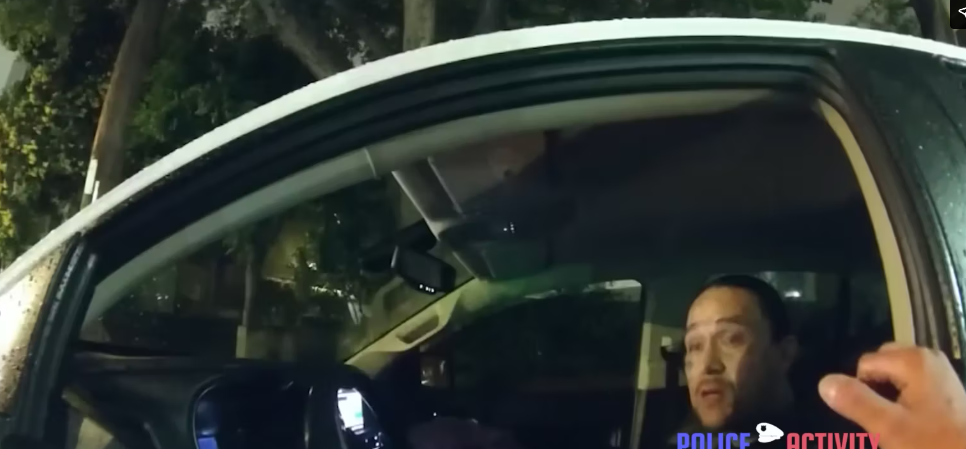
The Unfiltered Lens: Why America’s Police Body Camera Footage Captivates a Global Audience
For over a decade in the field of public safety technology and criminal justice observation, I’ve witnessed a profound shift in how the public interacts with law enforcement. Gone are the days when our understanding of policing was solely shaped by local news reports or dramatized television series. Today, a new, unfiltered window has opened: the relentless stream of police body camera footage. These raw, often chaotic, yet undeniably authentic clips, recorded by officers in the line of duty across the United States, have transcended mere digital content to become a global phenomenon, captivating millions on platforms like YouTube and TikTok. But why this visceral pull? Why are we so drawn to the shaky, sometimes grainy, unedited reality captured by these small, chest-mounted devices?
The fascination isn’t rooted in Hollywood-esque production values; it’s the raw, unscripted truth they reveal. Each piece of police body camera footage presents a high-stakes, real-world encounter, devoid of rehearsals or second takes. From routine traffic stops that escalate into unforeseen dangers to high-speed pursuits spanning state lines, or the tense, split-second decisions in dimly lit alleys, viewers aren’t just watching an arrest—they are witnessing the dynamic collision of order and chaos, discipline and desperation. This direct, unmediated access offers a perspective previously unavailable, fostering both intense scrutiny and a deeper, albeit often uncomfortable, understanding of the complexities inherent in modern policing. The allure lies in its authenticity, providing a ground-level view into moments that define justice, public safety, and human interaction under pressure.
From Reality TV Narratives to Evidentiary Imperatives: The Rise of Police Bodycams
To truly appreciate the current landscape of police body camera footage, we must first acknowledge its genesis. In the 1990s, shows like “COPS” brought police work into living rooms, offering a producer-edited glimpse into patrols and arrests. These programs, while groundbreaking for their time, relied on camera operators following officers, naturally introducing a layer of mediation and directorial influence. However, the advent of the body-worn camera (BWC) has fundamentally redefined this dynamic. The shift isn’t merely technological; it’s a paradigm change from entertainment to critical legal evidence and, crucially, a powerful tool for law enforcement transparency.
By 2025, the deployment of bodycams is virtually ubiquitous across major law enforcement agencies in the U.S. Prestigious departments such as the Los Angeles Police Department (LAPD), the New York City Police Department (NYPD), and numerous Sheriff’s offices across Florida and California, have long mandated their officers wear these devices. This isn’t just about equipping officers; it’s about establishing comprehensive body camera policies that dictate when and how recordings occur, and how the resulting digital evidence is managed. The cumulative result is an unprecedented “treasure trove” of raw, factual content—a level of reality no scripted Hollywood production could ever replicate. This police body camera footage captures the officer’s labored breath during a chase, the sharp command of “Drop the gun!”, and the agonizing 1/10th-of-a-second decisions that delineate life and death. For anyone interested in the practicalities of a criminal defense attorney or considering civil rights litigation against perceived police misconduct, this footage is often the linchpin of their case. It’s also instrumental for agencies looking into professional police training enhancements and robust risk management for law enforcement, as it provides invaluable learning opportunities. The move from selective reality TV narratives to evidentiary imperatives underscores the profound impact these devices have on the entire justice system.
Navigating Legal Labyrinths: The Challenge of Sovereign Citizens and First Amendment Auditors
Among the most “popular” and often perplexing content found within police body camera footage are interactions involving self-proclaimed sovereign citizens. These individuals adhere to a diverse, often contradictory, set of beliefs asserting their exemption from most U.S. federal and state laws. From my vantage point, having observed countless such encounters, these situations often spiral into protracted, legally convoluted, and intensely frustrating standoffs for officers.
Imagine an officer conducting a routine traffic stop, only to be met by a driver without a license or registration who then launches into a lengthy dissertation about “traveling, not driving,” or “their unalienable rights to free movement” under maritime law. These are not minor legal quibbles; they represent a fundamental challenge to the authority of the state. The outcomes are often predictable: a broken window, forced extraction, and an incredulous suspect. The value of police body camera footage in these scenarios cannot be overstated. It provides an objective record of the entire exchange, capturing both the suspect’s verbal assertions and the officer’s attempts to de-escalate and explain the law. For prosecutors, this digital evidence is critical. For a criminal defense attorney, it’s a vital tool to assess the legality of the stop and subsequent actions. Beyond sovereign citizens, a related, though distinct, phenomenon is the rise of First Amendment auditors. These individuals intentionally provoke interactions with law enforcement and other public officials to test their understanding and respect for constitutional rights, particularly free speech and the right to film in public spaces. While often acting within their rights, their confrontational tactics frequently create tension. Here again, the unedited police body camera footage becomes indispensable, safeguarding both the public’s rights and providing context for an officer’s actions, crucial for both police accountability and preventing false accusations. It highlights a critical aspect of American jurisprudence: rights and responsibilities are intrinsically linked, and misinterpreting or wilfully ignoring the latter has clear legal consequences.
Beyond the Frame: The Psychological Toll and Scrutiny of Officer-Involved Shootings (OIS)
While police body camera footage provides invaluable transparency, it also casts a harsh spotlight on the profound pressures officers endure. The public often sees only the decisive moments—the apprehension, the use of force—but rarely the crushing psychological aftermath that can follow. Having spent a decade immersed in this domain, it’s clear that every trigger pull, every critical use-of-force incident, even in clear self-defense, initiates a cascading series of events for the officer involved. This includes months, sometimes years, of rigorous investigation by Internal Affairs (IA) units, state attorney offices, and sometimes even federal agencies.
Officer-Involved Shootings (OIS) consistently dominate media headlines and fuel public demonstrations, creating an intense crucible of scrutiny. A decision made in a fraction of a second, potentially saving lives, can simultaneously trigger widespread civil unrest or calls for police reform if perceived negatively by the public or specific activist groups. This is why platforms like PoliceActivity and Donut Operator, which meticulously analyze police body camera footage and provide expert commentary on tactics and legal justifications, are so vital. They bridge the knowledge gap, helping the public understand the complex decision-making processes, the legal framework governing use of force, and the immediate dangers officers face. The intense pressure extends beyond the incident itself; officers must navigate the psychological trauma, the public backlash, and the very real threat of police misconduct lawsuits or legal liability for law enforcement. Agencies, in turn, must engage in robust risk management for law enforcement, employing thorough training, mental health support, and transparent review processes. The footage serves not only as evidence but also as a powerful educational tool for improving professional police training and fostering a more informed public discourse on police accountability and the realities of the job.
The Indispensable Partners: K9 Units in Modern Law Enforcement Operations
No comprehensive discussion of modern policing, particularly as depicted in police body camera footage, would be complete without acknowledging the critical role of K9 units. These “four-legged heroes,” predominantly Belgian Malinois and German Shepherds, are far more than just highly trained animals; they are indispensable partners, often the most effective tool in an officer’s arsenal for de-escalation, apprehension, and search operations. To criminals attempting to evade capture in dense underbrush or fortified structures, the bark and presence of a police K9 unit represent a formidable and often terrifying deterrent.
The command “Release the K9!” typically signifies a final resort when verbal commands and other less-lethal options have failed. Police body camera footage of K9s tracking, cornering, and apprehending armed or violent suspects consistently elicits awe and admiration from viewers, showcasing the unwavering courage, discipline, and specialized training of these canine officers. Beyond direct apprehension, K9s are crucial for drug detection, explosive ordnance disposal (EOD), and locating missing persons, significantly enhancing public safety. Their ability to operate in hazardous environments, coupled with their acute senses, provides a unique tactical advantage. For agencies, proper K9 unit management, including training, care, and clear deployment protocols, is paramount for effective law enforcement. The footage not only highlights their bravery but also underscores the rigorous training and bond between handler and dog, contributing to a broader understanding of the diverse tools and strategies employed in upholding the law.
The AI Revolution in Law Enforcement: Enhancing Analysis, Transparency, and Accountability
The sheer volume of police body camera footage generated daily presents both an opportunity and a challenge. This is where the AI revolution in law enforcement is proving transformative. We are on the cusp of, and in many ways already experiencing, an explosion of advanced AI tools—like sophisticated video analytics platforms—that are revolutionizing how this data is processed, analyzed, and utilized. These technologies are not just making operations more efficient; they are enhancing digital forensics, promoting transparency, and bolstering police accountability.
Imagine AI algorithms sifting through thousands of hours of police body camera footage to identify specific faces, analyze projectile trajectories in officer-involved shootings, or even flag particular verbal cues that often precede escalation. Advanced video analysis can clarify blurry segments, reconstruct event timelines with pinpoint accuracy, and automatically redact sensitive information for public release. Beyond forensic applications, AI-powered tools are automating the summarization of lengthy encounters into concise 10-minute reports, making crucial information more accessible for internal review, training purposes, and public consumption. This public safety technology is not about replacing human judgment but augmenting it, providing objective data points that support clearer decision-making and unbiased review.
The implications for criminal justice reform are profound. If an officer’s actions are questionable, the camera and AI analysis will provide compelling evidence. Conversely, if an officer acts appropriately under duress, the police body camera footage, enhanced by AI, serves as an irrefutable defense. This level of transparency fosters public trust in policing by demonstrating a commitment to factual accuracy and accountability. Furthermore, AI-driven solutions are instrumental in evidence management software, ensuring the integrity, security, and accessibility of vast digital archives. The future of law enforcement is inextricably linked to these technological advancements, promising a more efficient, transparent, and ultimately, fairer justice system.
The Enduring Impact and Evolving Narrative of Police Body Camera Footage
The journey from rudimentary reality TV to the ubiquitous presence of police body camera footage underscores a profound evolution in modern policing and its relationship with the public. These compact devices have become far more than mere recording tools; they are powerful catalysts for change, critical instruments for evidence, and fascinating cultural artifacts that offer an unparalleled window into the American criminal justice system. They’ve sparked global debates on police accountability, use of force policies, and the very definition of justice.
Viewers, whether in the United States or abroad, gain unique insights into tactical procedures, de-escalation techniques, and the complex legal landscape that governs law enforcement. This continuous stream of raw content contributes to a broader public education, shaping perceptions, challenging biases, and fostering a more nuanced understanding of the daily challenges and responsibilities faced by officers. The global fascination highlights a universal human interest in law, order, and the protection of civil liberties. As we look ahead, the integration of cutting-edge technology, particularly AI, promises to further refine the utility and impact of this footage, enhancing transparency, improving training, and fortifying public trust.
The evolving narrative surrounding police body camera footage is a testament to its enduring power. It is a story of technology meeting human drama, of accountability challenging authority, and of the persistent quest for truth in the most challenging of circumstances. As these digital records continue to accumulate, they will undoubtedly play an even more central role in shaping the future of law enforcement, criminal defense strategies, and the ongoing dialogue about justice in a democratic society.
If you are a law enforcement agency seeking to optimize your body camera program, enhance evidence management, or integrate advanced AI analytics for improved transparency and operational efficiency, or if you’re a legal professional requiring expert analysis of police body camera footage for a critical case, we invite you to connect with our team of seasoned industry experts. Explore how our solutions and insights can help you navigate the complexities of modern policing and leverage digital evidence to its fullest potential.