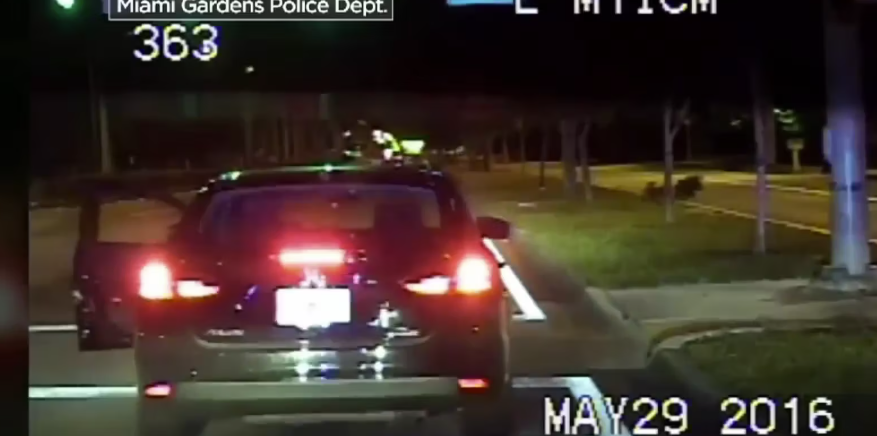
From Viral Vantage Points to Verified Verdicts: The Unpacking of Police Bodycam Footage
For a decade, I’ve been immersed in the intricate world where law enforcement intersects with public perception, technology, and the relentless pursuit of justice. My journey has taken me from the strategic deployment of advanced surveillance systems to the granular analysis of critical incident reviews. What started as a niche technology has exploded into a global phenomenon, shaping narratives, altering legal landscapes, and fundamentally transforming the relationship between citizens and the badge. Today, we’re not just watching viral clips; we’re witnessing a paradigm shift, driven by the omnipresent lens of police bodycam footage.
The magnetic pull of these raw, unscripted moments isn’t about cinematic polish; it’s about unparalleled authenticity. Long before high-definition cameras became standard issue, the public glimpsed policing through heavily edited television shows like “COPS.” Those shows offered a curated peek, but they couldn’t replicate the visceral reality captured by an officer’s personal camera. The raw, often shaky, first-person perspective offered by police bodycam footage has become a potent force, drawing tens of millions of views across digital platforms and sparking crucial dialogues about transparency, accountability, and the very nature of modern policing.
The Irresistible Pull of Real-Time Policing: Why We’re All Watching
The allure of police bodycam footage transcends mere entertainment. It taps into a primal human curiosity: the desire to witness truth unfold, unvarnished and unfiltered. We’re drawn to the high-stakes drama of a profession where every shift is an unpredictable gamble with destiny. From a seemingly routine traffic stop that spirals into a high-speed pursuit spanning multiple jurisdictions to the harrowing seconds of a life-or-death confrontation in a dimly lit alley, these videos provide a front-row seat to the daily realities of law enforcement.
What captivates viewers isn’t just the adrenaline; it’s the profound sense of witnessing the razor-thin line between order and chaos. Unlike scripted dramas, there are no retakes, no pre-written dialogue. The tension in an officer’s voice, the decisive command to “Drop the weapon!”, the split-second decisions that define fate – these elements are universally compelling. For many, police bodycam footage offers an invaluable, if sometimes unsettling, window into the challenges faced by officers, fostering a deeper, albeit often debated, understanding of their actions. This unique perspective contributes significantly to public discourse around justice and order.
The Transformative Journey: From Broadcast to Body-Worn Technology
The evolution of capturing law enforcement interactions has been nothing short of revolutionary. In the 1990s, the dominant medium was the “ride-along” documentary style, relying on camera operators trailing officers. This era, epitomized by shows like “COPS,” offered a third-person view, inherently subject to the framing and editorial choices of the production crew.
Fast forward to the 2010s, and the introduction of police bodycam footage marked a seismic shift. This wasn’t merely a technological upgrade; it was a fundamental change in the evidentiary landscape. Suddenly, the perspective shifted to the officer’s point of view, creating a truly immersive and irrefutable record of events. Major metropolitan departments, from the Los Angeles Police Department (LAPD) to the New York Police Department (NYPD) and countless Sheriff’s Offices across states like Florida and Texas, rapidly adopted mandatory body camera policies. This commitment to police bodycam footage was driven by a confluence of factors: enhancing officer safety, improving evidence collection, and critically, bolstering public trust and accountability.
The technology itself has undergone exponential advancements. Early models suffered from poor battery life, low resolution, and limited storage. Today, the latest iterations boast high-definition video, wide-angle lenses, pre-event recording buffers, secure cloud storage solutions, and robust data encryption. These innovations have transformed police bodycam footage from a simple recording device into a sophisticated component of a comprehensive digital evidence management system, crucial for both internal investigations and external scrutiny. The investment in these advanced law enforcement technology solutions has proven instrumental in enhancing the veracity of incident documentation.
Navigating Legal Labyrinths: The “Sovereign Citizen” Phenomenon and Beyond
One of the most perplexing and often viral elements captured in police bodycam footage involves interactions with individuals who identify as “Sovereign Citizens.” These individuals adhere to a decentralized ideology, believing that federal and state laws do not apply to them. Their encounters with law enforcement often devolve into lengthy, convoluted legal arguments based on misinterpretations of constitutional law and common-law principles.
Imagine a scenario, frequently depicted in viral clips: a driver without a license or registration, stopped by an officer, proceeds to deliver a protracted lecture on their “right to travel” freely, unfettered by governmental regulations. The outcome, as countless hours of police bodycam footage illustrate, is almost invariably the same: escalating tension, a refusal to comply, and often, the forceful removal of the individual from their vehicle. These incidents, while sometimes darkly comedic, underscore a serious challenge for officers. They not only consume valuable time and resources but also pose unique de-escalation challenges, as traditional legal arguments are often rejected by the “Sovereign Citizen.”
Beyond the Sovereign Citizen movement, police bodycam footage serves as an indispensable tool in navigating a myriad of complex legal situations. From documenting probable cause for arrests to capturing confessions or observing suspect behavior, the digital evidence provided by bodycams is often the definitive factor in court proceedings. It helps differentiate between reasonable suspicion and baseless accusations, strengthening both prosecution and defense arguments. For criminal defense attorneys, the availability of comprehensive police bodycam footage can be pivotal in evaluating the merits of a case and ensuring due process. The nuanced application of Fourth Amendment rights, often central to these interactions, is meticulously documented, leaving little room for subjective interpretation.
The Weight of the Badge: Unseen Pressures and Critical Decisions
While the public often sees the decisive action of an officer apprehending a suspect, what remains largely unseen are the immense psychological pressures that precede and follow such events. Every deployment of force, especially an officer-involved shooting (OIS), triggers a cascade of internal investigations, media scrutiny, and profound personal toll.
When an officer is forced to use their firearm, even in clear self-defense, the aftermath involves months, sometimes years, of rigorous investigation by internal affairs units and often independent oversight bodies. Each bullet fired, each command shouted, is dissected under a microscope. A decision made in a fraction of a second, under extreme duress, can save lives or, conversely, ignite widespread social unrest and protests. This is where the unbiased record of police bodycam footage becomes not just evidence, but a crucial protective measure for both the officer and the public. It can corroborate an officer’s account, vindicate their actions, or conversely, highlight misconduct.
Expert analysis channels, frequently featuring former law enforcement officers or legal experts, play a vital role in contextualizing these incidents for the public. They meticulously break down police bodycam footage, explaining tactics, legal frameworks, and the psychological factors at play, helping bridge the gap between community perception and operational reality. This specialized insight is critical for understanding why officers act the way they do in incredibly complex, high-stress environments, fostering more informed discussions about police accountability solutions and ethical conduct. The mental health implications for officers, often suffering from PTSD or moral injury after critical incidents, are a growing concern within police departments, highlighting the unseen burdens carried by those who serve.
Unsung Heroes with Four Paws: The Indispensable Role of K9 Units
No discussion of modern policing would be complete without acknowledging the extraordinary contributions of K9 units. These highly trained police service dogs, predominantly breeds like Belgian Malinois and German Shepherds, are far more than companions; they are indispensable members of the force, capable of tasks no human officer can perform. Their presence strikes fear into the hearts of fleeing suspects and provides an unparalleled advantage in tracking, detection, and apprehension.
The command, “Release the K9!” is often the final escalation when verbal commands and less-lethal options have failed. Police bodycam footage vividly captures the incredible courage and discipline of these four-legged warriors, showcasing them tracking suspects through dense brush, locating narcotics, or apprehending armed individuals. The footage provides crucial documentation of K9 deployments, demonstrating the circumstances leading to their use and the effectiveness of their actions.
The training regimen for K9 units is rigorous, involving thousands of hours to hone their abilities in obedience, protection, scent detection, and tactical maneuvers. From a legal standpoint, the use of K9s is considered a use of force, and departments have strict policies governing their deployment. The objective, dispassionate record provided by police bodycam footage is therefore invaluable for reviewing these incidents, ensuring compliance with departmental policies and legal standards, and substantiating the necessity of the K9’s intervention. This specialized role highlights the continuous innovation in police department operations and public safety technology investment.
The Digital Frontier: AI, Analytics, and the Future of Law Enforcement Data
We stand at the precipice of a new era, one where artificial intelligence (AI) and advanced analytics are revolutionizing how law enforcement agencies manage, process, and derive insights from vast quantities of data, particularly from police bodycam footage. Platforms like those developed by technology innovators are no longer futuristic concepts; they are operational realities, enhancing clarity, accelerating investigations, and improving transparency.
AI-powered tools can now perform intricate analyses that were once the domain of human analysts. This includes automated redaction of sensitive information (faces of minors, license plates), facial recognition to identify suspects or missing persons, object detection to flag weapons or contraband, and even ballistic trajectory analysis to reconstruct crime scenes with unparalleled accuracy. These capabilities significantly reduce the manual workload for investigators, allowing them to focus on critical decision-making.
However, this technological leap brings with it complex ethical and privacy considerations. The sheer volume of data generated by police bodycam footage necessitates robust digital evidence management systems and stringent protocols for data retention, access, and security. Debates around data privacy, algorithmic bias, and the potential for surveillance overreach are ongoing, demanding thoughtful legislation and transparent implementation.
Looking towards 2025 and beyond, we can anticipate even more sophisticated integration. Real-time streaming of police bodycam footage to command centers, predictive analytics that inform resource deployment, and seamless integration with other smart city technologies are on the horizon. The goal is clear: to leverage technology not to replace human judgment, but to augment it, making law enforcement more efficient, effective, and crucially, more accountable. The future of police department innovation will undoubtedly be intertwined with advanced AI and secure cloud infrastructure for managing this critical data.
Beyond the Lens: Police Bodycams as a Cultural Touchstone and Catalyst for Change
The proliferation of police bodycam footage has transcended its primary function as an evidentiary tool to become a potent cultural phenomenon. It has fundamentally reshaped public discourse around policing, justice, and civil liberties, not just within the United States but globally. Viewers from diverse backgrounds are engaging with these videos, not merely as spectators, but as participants in a larger societal conversation.
This unfiltered window into law enforcement operations has fueled the push for greater transparency and accountability, putting pressure on departments to adopt best practices and continually review their use of force policies. It has also become an invaluable training resource, offering real-world scenarios for recruits and veteran officers alike, allowing them to dissect critical incidents and refine de-escalation tactics without putting lives at risk.
The narrative surrounding police has undeniably become more complex. While some see police bodycam footage as definitive proof of misconduct, others view it as validation of the incredibly difficult and dangerous work officers perform daily. This polarity underscores the ongoing challenge of balancing individual privacy with public safety, and the essential role that objective evidence plays in fostering informed debate.
The drama will undoubtedly continue to unfold on highways, in urban centers, and across digital screens. And through it all, the humble body camera will remain an unflinching witness, a silent narrator, continuing to shape our understanding of public safety and the complexities of human interaction under pressure. The demand for body camera compliance and robust oversight will only grow, cementing their place as indispensable tools in the evolving landscape of justice.
In an era where information travels at the speed of light and public scrutiny is constant, the clarity and impartiality provided by police bodycam footage are more critical than ever. As we look ahead, the strategic deployment, ethical management, and intelligent analysis of this digital evidence will define the future of trust and transparency in law enforcement.
If your organization is seeking to navigate the intricate landscape of digital evidence management, optimize your body camera programs, or develop bespoke training leveraging this invaluable footage, we invite you to connect with our expert team. Let’s explore how tailored solutions can enhance your operational effectiveness and strengthen community relations.