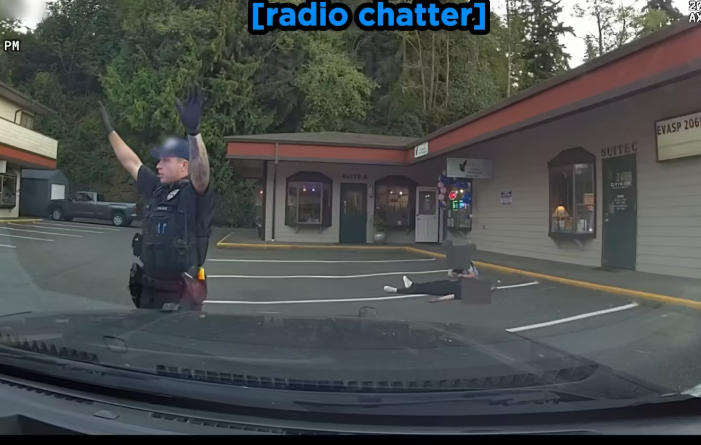
Beyond the Headlines: A Deep Dive into Police Misconduct and the Erosion of Public Trust
As an industry expert with over a decade immersed in the complexities of law enforcement and criminal justice, I’ve witnessed firsthand the profound impact of police misconduct on communities, individual lives, and the very fabric of our democratic institutions. While media headlines often sensationalize isolated incidents of excessive force, the true challenge lies in understanding the deeper, systemic issues that contribute to police misconduct, eroding public trust and undermining the critical mission of public safety. This isn’t merely about bad apples; it’s about the barrel, the orchard, and the cultivation practices themselves.
The core of this intricate problem often begins with a fundamental truth: power is a potent intoxicant. Grant an individual the authority to stop any vehicle, detain any person, and employ force in the name of the law, and the boundary between “enforcing” and “imposing” can become perilously thin. This inherent power, essential for maintaining order, is also the same power that, unchecked, can lead to devastating abuse of power. Navigating this delicate balance is arguably the greatest challenge faced by law enforcement agencies globally, and particularly within the United States.
The Potent Intoxicant of Authority: Deconstructing the Power Dynamic
The badge carries immense weight, symbolizing authority, protection, and the right to use force. This unique grant of power, which includes the power of arrest, detention, and the ability to escalate situations, distinguishes law enforcement officers from virtually any other profession. Unlike other public servants, police officers are routinely placed in high-stakes, rapidly evolving scenarios where split-second decisions can have life-or-death consequences. This environment, while demanding absolute professionalism and ethical conduct, also creates fertile ground for the seeds of police misconduct to take root if not vigilantly managed.
The psychological impact of wielding such power is often underestimated. Officers are tasked with enforcing laws, protecting the vulnerable, and confronting dangerous situations, yet they are also human beings susceptible to stress, burnout, and the subtle corrosion of idealism. When the lines blur between “serving and protecting” and “exercising control,” the potential for abuse of power escalates. This manifests not only in overt acts of police brutality but also in more insidious forms, such as discriminatory policing practices, harassment, or the selective application of the law. Understanding this power dynamic is crucial for any meaningful discussion about police reform and accountability. It’s about recognizing that the authority bestowed upon officers is a sacred trust, not an inherent right, and any deviation constitutes a betrayal of that trust.
The Gradual Descent: Anatomy of Law Enforcement Corruption
The complete degradation of integrity rarely happens overnight. Instead, it’s a gradual process, a slow erosion of ethical boundaries that often begins with seemingly minor transgressions. Consider the subtle favors: a complimentary meal from a business owner seeking “priority” treatment, a blind eye turned to a colleague’s minor infraction, or the casual bending of rules in the name of expediency. Individually, these acts might appear inconsequential, but cumulatively, they pave a dangerous path. This “slippery slope” paradigm is a well-documented phenomenon in organizational ethics, and law enforcement is far from immune.
As these small compromises accumulate, the internal moral compass begins to drift. The initial rationale might be justifiable: “I put my life on the line every day; a free coffee isn’t hurting anyone.” But this justification subtly morphs into a more dangerous form of entitlement. The personal ego starts to overshadow professional ethics. The insidious self-promise—”I sacrifice my life for this rotten city; I deserve more than this meager paycheck”—becomes the most perilous internal monologue, a direct conduit to the abyss of law enforcement corruption. This mindset fosters an “us vs. them” mentality, alienating officers from the very communities they serve and creating an insular culture where officer misconduct can thrive, shielded by a “blue wall of silence.” This internal culture often becomes a significant barrier to effective police accountability. It’s a critical area that demands robust ethical leadership and proactive interventions to reinforce police ethics and integrity.
High-Profile Scandals and the Demand for Systemic Change (Updated to 2025 Context)
While the specifics of the 2024 “special criminal zone” scandal—where a cohort of officers allegedly transformed into the city’s largest gang, extorting drug money, fabricating evidence, and eliminating obstacles—might seem extreme, such incidents are stark reminders of the profound depths to which police misconduct can sink. These high-profile cases, which sadly continue to emerge across various municipalities, expose not just individual failings but often underlying systemic vulnerabilities. They represent egregious civil rights violations that devastate lives, shatter community trust, and can lead to wrongful convictions, sparking outrage and calls for profound justice system reform.
The aftermath of such scandals invariably highlights the crucial need for effective oversight. Questions arise about internal affairs divisions: are they sufficiently independent? Do they possess the resources and political will to investigate deeply and impartially? Or do they become another layer protecting the institution rather than holding individuals accountable? The public, increasingly skeptical, demands greater transparency and more robust external oversight mechanisms. These incidents are not just isolated tragedies; they are catalysts that force society to re-examine the frameworks designed to prevent and address police misconduct, including the efficacy of training, recruitment, and the systems of checks and balances within our law enforcement agencies.
The Unavoidable Intersection: Technology in Exposing and Preventing Police Misconduct
While the original article’s heading pointed to “Technology” in a seemingly disconnected manner, for an expert in 2025, technology is not just a backdrop; it’s an undeniable, transformative force in both exposing and, crucially, preventing police misconduct. The ubiquity of body-worn cameras, dash cameras, and civilian cell phone footage has fundamentally altered the landscape of police-community interactions. What once could be dismissed as “he-said, she-said” now often comes with compelling visual and audio evidence, providing invaluable tools for investigations into police brutality and other forms of officer misconduct. This technological transparency significantly enhances police accountability.
Beyond direct incident capture, data analytics and artificial intelligence are emerging as powerful tools for proactive intervention. Predictive policing models, when ethically developed and applied, can identify patterns of behavior among officers that might indicate a propensity for excessive force or other forms of police misconduct before incidents escalate. Early warning systems, fueled by data from citizen complaints, internal reviews, and use-of-force reports, can flag officers who may benefit from additional training, counseling, or reassignment. Virtual reality simulations are revolutionizing de-escalation training, allowing officers to practice conflict resolution in realistic, consequence-free environments, enhancing their skills and potentially reducing instances of police negligence claims.
However, the intersection of technology and policing is a double-edged sword. While it offers unprecedented opportunities for transparency and accountability, it also raises complex questions about privacy, data security, and the potential for algorithmic bias. The deployment of surveillance technologies, from facial recognition to social media monitoring, requires careful ethical oversight to ensure they are used to promote justice and public safety, not to infringe upon constitutional rights or disproportionately target specific communities. The effective integration of technology demands a commitment to transparency, robust policies, and continuous evaluation to maximize its benefits while mitigating its risks in the ongoing effort to combat police misconduct.
Rebuilding Trust: Comprehensive Strategies for Police Reform
Addressing police misconduct is not a singular task but a multi-faceted endeavor demanding comprehensive police reform. It requires a commitment to transforming the culture of policing from one of insularity to one of transparency and collaboration. Central to this transformation is strengthening police accountability. This means implementing independent civilian oversight boards with real investigative and disciplinary power, ensuring that internal affairs investigations are unbiased, and creating clear, accessible channels for citizens to report civil rights violations and excessive force.
Recruitment and training must also evolve. Emphasizing community-oriented policing, de-escalation techniques, and cultural competency from the earliest stages of an officer’s career can foster a generation of law enforcement professionals who prioritize empathy and problem-solving over confrontation. Bias training, implicit and explicit, is no longer a luxury but a necessity, equipping officers to serve all members of society fairly. Fair compensation and adequate resources are also crucial. While not an excuse for corruption, underpaid and overworked officers can become more susceptible to moral compromises. Investing in officer well-being, including mental health support, can help mitigate stress and burnout, reducing the likelihood of officer misconduct.
Furthermore, legal remedies play a vital role. Individuals impacted by police misconduct must have clear and effective avenues for redress. This includes robust support for police misconduct lawsuit actions, providing access to qualified police brutality lawyer and false arrest attorneys who can advocate for victims’ constitutional rights. Accountability through litigation, challenging instances of malicious prosecution or wrongful conviction, sends a powerful message that such actions will not go unpunished. Ultimately, rebuilding public trust hinges on a transparent system that not only punishes wrongdoers but also proactively prevents future police misconduct through genuine engagement and systemic improvements.
The Path Forward: Fostering a Culture of Integrity and Ethical Policing
The journey to eradicate police misconduct is continuous, requiring unwavering commitment from leadership, officers, and the communities they serve. It demands a cultural shift within law enforcement agencies, moving beyond reactive measures to proactive cultivation of police integrity and ethical excellence. This involves consistently reinforcing the values of service, respect, and impartiality. Leaders must champion ethical behavior, creating an environment where officers feel empowered to speak out against wrongdoing without fear of retaliation, dismantling the “blue wall” from within.
Fostering robust police ethics is not just about rules and regulations; it’s about embedding a deep-seated commitment to justice and fairness in every action, every interaction. It’s about recognizing that the power vested in law enforcement is a sacred trust, and upholding that trust is paramount to the legitimacy and effectiveness of the entire criminal justice system. When communities trust their local police departments, crime rates often decrease, cooperation improves, and the fabric of society strengthens. This synergy is critical for true public safety.
In conclusion, the issue of police misconduct is a complex tapestry woven from individual failings, systemic vulnerabilities, and the inherent challenges of wielding immense power. It demands more than just outrage; it requires a sophisticated, multi-faceted approach encompassing transparent oversight, comprehensive reform, technological innovation, and a profound commitment to ethical policing at every level. Our collective goal must be to ensure that law enforcement truly lives up to its noble mandate: to serve and protect, with unwavering integrity and unwavering accountability.
If you or someone you know has been affected by police misconduct, understand that you have rights and avenues for recourse. Taking the next step to seek legal counsel can be crucial in holding individuals and institutions accountable and contributing to the ongoing pursuit of justice. Do not hesitate to consult with experienced attorneys specializing in civil rights and police misconduct lawsuit claims to understand your options and secure the legal remedies for police abuse you deserve. Your voice is a vital part of fostering a more just and equitable future for all.