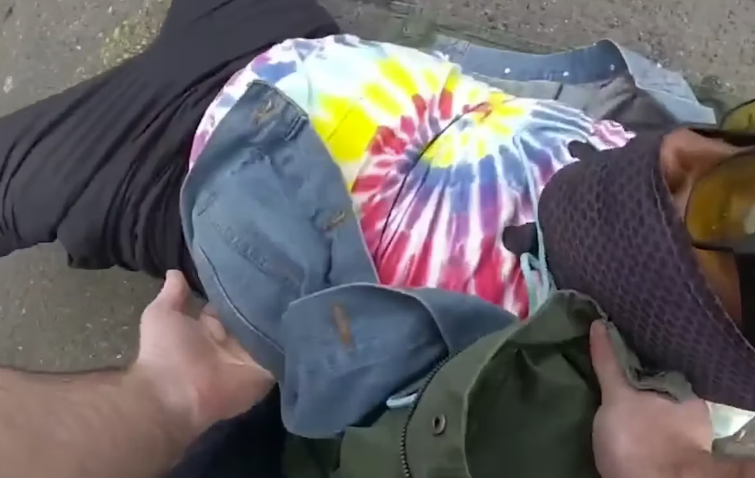
Decoding the Lens: The Unfiltered Reality of US Police Body Camera Footage
For over a decade, my work in law enforcement technology has offered a unique vantage point into the evolving landscape of public safety and digital evidence. From consulting with major metropolitan police departments like the LAPD and NYPD on security system integration to advising smaller sheriff’s offices in Florida on government procurement technology, I’ve witnessed firsthand the transformative power of the camera, especially the ubiquitous police body camera footage. This isn’t just about recording; it’s about reshaping accountability, trust, and the very fabric of our justice system in 2025 and beyond.
The magnetic pull of raw, unscripted encounters captured by these devices speaks volumes. While reality television shows like “COPS” offered a curated glimpse into police work in the 90s, the advent of police body camera footage ushered in an era of unfiltered reality, democratizing access to the often-tense and unpredictable world of law enforcement. These aren’t Hollywood productions; they are fragments of real life, real danger, and real decisions made in fractions of a second. This transparency, even when jarring, forms a critical pillar of modern police accountability.
The Unfiltered Gaze: Why We’re Drawn to Police Body Camera Footage
Consider the millions of views garnered by shaky, pixelated clips from an officer’s chest. It’s not the cinematic quality that captivates us, but the raw, unvarnished truth. These videos strip away pretense, revealing the gritty reality of patrol work: from seemingly routine DUI stops that escalate unexpectedly to high-speed pursuits spanning multiple jurisdictions, or the gut-wrenching tension of a stand-off in a dimly lit alley. We’re not just passive observers; we’re immersed in the immediate aftermath of critical incidents, witnessing the dynamic interplay between order and chaos, discipline and desperation. The emotional resonance of an officer’s strained breath, the sharp command to “Drop the gun!”, or the split-second decision between life and death – this visceral honesty is what truly hooks the viewer. It’s an unparalleled window into the often-misunderstood challenges faced by officers daily, offering insights that no staged drama could ever replicate.
From Analog Storytelling to Digital Truth: The Bodycam Revolution
The journey from traditional broadcast journalism following officers in squad cars to the personal, POV perspective of police body camera footage represents a monumental leap in documentation. What began as a tool for internal review has rapidly evolved into the ultimate legal evidence, reshaping courtrooms, public discourse, and law enforcement accountability. Major agencies across the United States have mandated their officers wear these cameras, creating an expansive digital archive of daily interactions. This shift has profound implications: it ensures that actions are recorded, that narratives can be corroborated or challenged, and that an objective record exists.
This technological evolution isn’t without its challenges. The sheer volume of police body camera footage necessitates robust digital evidence management systems, secure cloud storage, and stringent data retention policies. Furthermore, the policies governing when cameras are activated, what constitutes a public record, and how privacy is balanced against transparency are continually being refined. As an industry expert, I’ve seen departments grapple with the complexities of these implementations, understanding that the camera’s presence not only records events but also subtly influences behavior – both of officers and the public they serve. This dual impact underscores the critical role of careful policy formulation and continuous training in maximizing the benefits of this crucial law enforcement technology.
Navigating Legal Labyrinths: Sovereign Citizens and Challenging Authority
Among the most intriguing and often frustrating encounters documented by police body camera footage are those involving individuals identifying as “Sovereign Citizens.” These individuals adhere to a fringe ideology asserting that they are not subject to federal, state, or local laws. Their interactions with law enforcement frequently escalate, turning what should be routine traffic stops into prolonged, constitutionally argumentative confrontations.
Imagine an officer pulling over a vehicle with no license plates, operated by someone without a driver’s license. Instead of compliance, the officer is met with a lengthy, often nonsensical dissertation on “traveling rights” or the supposed illegitimacy of the Uniform Commercial Code. These encounters, while often bizarre, highlight a fundamental tension between individual interpretation of liberty and the established rule of law. The police body camera footage in these scenarios becomes invaluable. It not only captures the verbal exchange but also provides an indisputable record of the individual’s actions, the officer’s attempts at de-escalation, and ultimately, the necessary use of force when compliance fails. Such videos are not merely entertaining; they serve as a powerful educational tool, illustrating the reality that rights in a civil society are inextricably linked with responsibilities and adherence to a common legal framework. For criminal defense attorney professionals, this footage is often a cornerstone, either to defend an officer’s actions or to challenge the legality of an arrest. Integrating advanced legal tech solutions in these cases can often streamline evidence review, enhancing the efficiency and fairness of the judicial process.
The Weight of the Badge: Psychological Toll and Scrutiny of Officer-Involved Shootings
Behind the veneer of authority and the perceived invincibility of the uniform lies a profound human experience, fraught with immense psychological pressure. The public often sees only the decisive actions of an officer subduing a suspect, but rarely do they witness the profound aftermath. Every use of force, especially an officer-involved shooting (OIS), triggers an extensive and often grueling internal investigation by Internal Affairs. These inquiries, spanning months, dissect every decision, every movement, and every verbal command, placing the officer under an intense microscope.
OIS incidents, captured extensively by police body camera footage, are particularly volatile. They instantaneously become flashpoints for media scrutiny, public protests, and passionate debates about police accountability and use of force incidents. A decision made in a fraction of a second, even if legally and tactically sound, can reverberate through communities, potentially leading to civil unrest or profound mistrust. This is why analytical platforms and expert commentaries, much like those I engage with in my own consulting work, are crucial. They provide vital context, helping to educate the public on the split-second cognitive and physiological challenges officers face in high-stress situations. The camera, in these instances, can be both a prosecutor and a defender, serving as an impartial witness to the events that unfold. For agencies, robust risk management solutions and comprehensive officer wellness programs become paramount, recognizing the immense mental and emotional burden carried by those tasked with maintaining public safety. When an officer requires police legal defense, the clarity provided by this footage is indispensable.
The Unsung Heroes: K9 Units and Their Indispensable Role
No discussion of modern policing would be complete without acknowledging the incredible contributions of K9 units. These highly trained, four-legged partners – often Belgian Malinois or German Shepherds – are more than just deterrents; they are indispensable assets in tracking suspects, detecting contraband, and protecting officers. Their unwavering loyalty, acute senses, and rigorous training make them a formidable force, striking fear into the hearts of criminals hiding in dense foliage or evading arrest.
The command, “Release the K9!”, is typically the last resort, deployed when verbal commands and other less-lethal options have failed to secure compliance. The police body camera footage of K9s engaging and subduing armed or fleeing suspects is consistently among the most compelling and often awe-inspiring content. These clips not only showcase the animals’ incredible courage and discipline but also underscore the strategic value they bring to dangerous situations, often preventing further escalation or injury. Their effectiveness in criminal justice system operations, from search and rescue to apprehension, is undeniable. For departments, the investment in and careful deployment of K9 units, often supported by specialized security system integration for training facilities, represents a commitment to maximizing operational efficiency and officer safety.
The AI Frontier: Transforming Digital Evidence and Forensic Analysis
We are on the cusp of a revolutionary era, where artificial intelligence is fundamentally transforming how police body camera footage is managed, analyzed, and leveraged. Tools like advanced video analytics platforms are moving beyond simple recording, becoming active partners in forensic investigation and data synthesis. Imagine AI capable of rapidly clarifying blurred faces, precisely tracking bullet trajectories, identifying specific objects or vehicles, or even analyzing body language and voice stress patterns in an incident.
This isn’t science fiction; it’s the trajectory of law enforcement technology in 2025. AI-powered platforms can sift through thousands of hours of police body camera footage, extracting critical events and compressing them into succinct, actionable summaries for investigators or content creators. This efficiency dramatically reduces the manual labor involved in evidence review, accelerates case processing, and enhances the overall accuracy of investigations. For digital forensics services, this evolution is a game-changer, enabling deeper insights from complex video data. The promise of AI lies in its impartiality: it doesn’t speculate, it analyzes data. If an officer errs, the camera and AI will provide the evidence. If an officer acts correctly under pressure, the digital record will provide irrefutable proof, bolstering their defense and reinforcing public trust in police accountability. This integration of AI represents a significant leap forward in optimizing public safety consulting strategies and validating advanced legal tech solutions.
Police Body Camera Footage: A Cultural Cornerstone and Catalyst for Change
Beyond its practical applications in law enforcement, police body camera footage has undeniably cemented its place as a significant element of global popular culture. Through platforms like YouTube and TikTok, these real-life narratives transcend geographical boundaries, offering viewers in every corner of the world an unfiltered look into the complexities of American society and its justice system. What began as a tool for transparency and evidence has evolved into a powerful educational resource. Viewers learn about de-escalation tactics, legal procedures, community engagement, and the profound human drama inherent in police work.
The clips become teachable moments, sparking conversations about civil rights, the appropriate use of force, and the challenges of policing a diverse populace. They shape public perception, influence policy discussions, and underscore the ongoing need for transparency in government functions. The narrative of modern policing, in many ways, is now inextricably linked to the lens of the body camera. As an industry expert, I anticipate the drama will continue to unfold on our streets and highways, and the police body camera footage will remain an unwavering, unblinking witness, continually shaping our understanding of justice, responsibility, and the human element within law enforcement.
Taking the Next Step in Public Safety Innovation
The insights derived from police body camera footage are invaluable, driving improvements in training, policy, and technology. If your agency is navigating the complexities of implementing new law enforcement technology, optimizing digital evidence management, or seeking expert guidance on risk management solutions and public safety consulting, understanding the full scope of these capabilities is essential. Leverage our decade of experience to strategically enhance your operations and foster greater trust within your community. Connect with us today to explore how our expertise can support your evolving public safety objectives.