The Unblinking Witness: How Police Bodycam Footage Reshaped Law Enforcement and Public Trust in the Digital Age
As someone who has navigated the intricate landscape of law enforcement technology and public accountability for over a decade, I’ve witnessed firsthand a profound transformation in how we perceive and interact with policing. Gone are the days when narrative was solely controlled by official reports or subjective eyewitness accounts. Today, we live in the era of the “unblinking witness,” where police bodycam footage offers an unparalleled, raw, and often uncomfortable look into the realities of street-level enforcement. This isn’t just about capturing evidence; it’s about reshaping transparency, accountability, and the very fabric of community trust, pushing boundaries that even a few years ago seemed insurmountable.
The Irresistible Pull of Raw Reality: Why Police Bodycam Footage Dominates Our Screens
Have you ever found yourself mesmerized by a shaky, often chaotic clip from an officer’s chest-mounted camera? You’re not alone. Millions globally flock to platforms like YouTube and TikTok for an unfiltered glimpse into American policing. This isn’t high-definition cinema; it’s unvarnished reality, and that’s precisely its magnetic draw. From what appears to be a routine traffic stop for a suspected DUI to a high-octane pursuit spanning multiple counties, or the heart-stopping split-second decision in a deadly force encounter, police bodycam footage throws viewers directly into the crucible of law enforcement.
What captivates us isn’t special effects; it’s the raw authenticity of human drama unfolding in real-time. Each shift becomes an unscripted play where order confronts chaos, discipline meets defiance, and lives hang in the balance. We don’t just observe an arrest; we witness the nuanced interplay of escalating tension, de-escalation attempts, and the often-fraught consequences. This direct lens provides an unparalleled understanding of the pressures officers face, compelling us to analyze, criticize, and, at times, empathize with decisions made in fractions of a second. It’s a powerful tool, not only for public consumption but also for police academy training, offering invaluable case studies for future officers. The public’s insatiable appetite for this content underscores a deeper yearning for transparency and an understanding of the complex, often dangerous world of policing.
From ‘COPS’ to C.L.E.A.R.: The Evolution of On-Duty Documentation
Our journey into documented policing began decades ago with shows like “COPS,” where cameramen shadowed officers, offering a curated, albeit groundbreaking, peek behind the badge. While those programs opened a window, they were still television productions, subject to editing and external camera angles. The advent of body-worn cameras (BWCs), specifically the ubiquity of police bodycam footage, has fundamentally transformed this dynamic. This isn’t entertainment; it’s often the ultimate piece of digital evidence in a legal proceeding.
Across the United States, from the sprawling metropolis of Los Angeles (LAPD) to the dense urban landscape of New York City (NYPD), and countless Sheriff’s departments in states like Florida and Texas, the mandatory deployment of body cameras has become standard operating procedure. This shift didn’t happen overnight; it was driven by a convergence of technological advancements, increasing calls for law enforcement transparency, and the need for irrefutable records in an era of heightened scrutiny. The resulting repository of police bodycam footage is a treasure trove of real-life events that no Hollywood script could authentically replicate. We hear the officer’s strained breath, the definitive commands like “Drop the weapon!”, and witness the life-or-death choices made in the blink of an eye. This technology has elevated the standard for public accountability, ensuring that actions taken on the street are meticulously documented, offering critical context for everything from routine interactions to complex use-of-force incidents. The transition from external observation to internal, officer-centric recording marks a pivotal moment in the history of law enforcement, setting new benchmarks for evidence collection and truth verification.
Decoding the Confrontation: Sovereign Citizens and the Legal Labyrinth Captured on Bodycam
One of the most compelling and, at times, perplexing segments of police bodycam footage widely shared involves interactions with individuals identifying as “Sovereign Citizens.” These individuals adhere to a complex, often contradictory belief system that asserts they are exempt from specific US laws, especially those related to licensing, taxation, and vehicle registration. For seasoned officers, these encounters represent a unique blend of legal argument, tactical challenge, and psychological navigation.
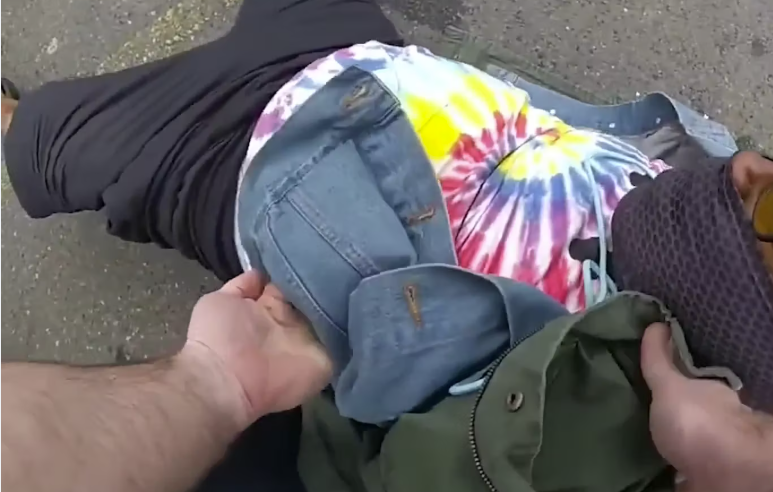
Imagine a scenario, vividly captured on countless bodycams: a driver pulled over for expired tags or a traffic infraction, lacking a valid license or vehicle registration. Instead of compliance, they launch into a lengthy, often rambling discourse about their “constitutional rights,” citing obscure legal interpretations and refusing to acknowledge the officer’s authority. This phenomenon, which can turn a simple traffic stop into a protracted standoff, is a common feature in police bodycam footage. The outcome, frequently, is a dramatic escalation—a shattered window, a forced extraction, and an arrest executed amidst the protestations of the bewildered individual. These clips serve a dual purpose: they are undeniably engaging for their dramatic tension, but more importantly, they offer a stark lesson in American jurisprudence. They underscore the foundational principle that rights are inextricably linked with responsibilities, and that defiance of established law, regardless of personal belief, carries consequences. For legal defense attorneys and civil rights lawyers, such footage becomes central to litigation, analyzing whether officers adhered to proper procedure in the face of non-compliance. These incidents highlight the ongoing challenges in risk management in policing, where officers must balance legal constraints with maintaining public order and ensuring their own safety.
Beyond the Badge: The Unseen Toll and Public Scrutiny of Officer-Involved Incidents
While police bodycam footage offers an objective record, it also lays bare the profound psychological and emotional burdens carried by law enforcement officers. We, the public, often see the immediate aftermath of a critical incident – the apprehension of a suspect, the securing of a scene. What remains largely unseen, however, is the immense internal pressure an officer endures following a significant event, particularly an Officer-Involved Shooting (OIS).
Every time an officer discharges their firearm, even in clear self-defense, it triggers a cascade of internal and external processes. Months of rigorous investigation by Internal Affairs units are standard. The incident becomes a magnet for intense media scrutiny, public debate, and often, protests. A justified decision can save lives; a perceived error, even a minor one, can ignite widespread civil unrest. This is where expert analysis, often drawing heavily on police bodycam footage, becomes indispensable. Channels run by former officers or forensic experts provide crucial context, explaining tactical decisions, legal frameworks, and the physiological responses that influence an officer’s actions in high-stress situations. This analysis is vital for promoting understanding, challenging misinformation, and informing discussions around use of force policies and de-escalation tactics. The footage doesn’t just capture events; it frames narratives, holds departments accountable, and, crucially, helps protect officers when their actions are justified. The mental health support systems for officers post-OIS are now more critical than ever, recognizing the profound impact these incidents have, regardless of outcome. The integration of video evidence management systems is critical here, ensuring secure and accessible footage for all investigative stages.
The Unsung Heroes: K9 Units as Force Multipliers in Modern Policing
No discussion of dynamic policing, especially as captured by police bodycam footage, would be complete without acknowledging the invaluable contribution of K9 units. These specialized dog teams, often comprising highly trained breeds like Belgian Malinois or German Shepherds, are more than just loyal companions; they are sophisticated tactical gear and force multipliers that have saved countless lives and apprehended dangerous criminals.
The command “Release the K9!” frequently signifies a critical juncture in a pursuit or standoff, often after verbal commands and other de-escalation methods have failed. Whether tracking a fleeing suspect through dense brush, locating narcotics, or protecting their handler during a dangerous confrontation, K9s operate with an astonishing level of courage, discipline, and instinct. The police bodycam footage capturing these moments—a K9 fearlessly engaging an armed suspect, navigating treacherous terrain, or uncovering hidden contraband—consistently elicits admiration and awe from viewers. These “four-legged warriors” represent a significant investment in police equipment supplier budgets, undergoing rigorous training that establishes an unbreakable bond with their handlers. Their presence on the street not only enhances officer safety but also serves as a potent deterrent. The effectiveness of K9 units is a testament to the power of specialized training and the profound capabilities of these incredible animals, making them an indispensable asset in modern law enforcement and often the difference between a successful resolution and a prolonged, dangerous standoff.
The Algorithmic Eye: AI, Data Management, and the Future of Police Bodycam Footage
We stand at the precipice of a new era, where artificial intelligence (AI) is rapidly transforming how law enforcement processes, analyzes, and leverages vast quantities of police bodycam footage. Tools like advanced forensic video analysis software are no longer futuristic concepts; they are actively deployed, revolutionizing everything from routine evidence review to complex investigations.
These AI systems can perform a myriad of tasks that would be impossible or incredibly time-consuming for human analysts. Imagine software that automatically redacts sensitive information (faces of minors, specific documents) to protect privacy, analyzes ballistic trajectories from multi-angle footage, or even clarifies blurry faces to aid identification. AI can sift through thousands of hours of police bodycam footage, tagging relevant events, transcribing dialogue, and summarizing critical incidents into concise, actionable reports for investigators or content creators. This represents a monumental leap in law enforcement software capabilities, enhancing efficiency and accuracy. However, this technological marvel also brings forth new challenges, particularly concerning data privacy law enforcement and the ethical implications of sophisticated surveillance. The sheer volume of data generated by bodycams necessitates robust video evidence management systems, often cloud-based, that ensure secure storage, easy retrieval, and chain of custody integrity. Looking to 2025 and beyond, AI will increasingly play a role in predictive policing, identifying patterns, and even creating immersive police academy training simulations based on aggregated incident data. The technology does not lie; it offers unprecedented transparency, protecting officers when justified and exposing misconduct when it occurs, ultimately reinforcing the call for a more equitable and efficient criminal justice system.
The Cultural Resonance and Enduring Legacy of Police Bodycam Footage
The pervasive presence of police bodycam footage transcends its primary function as legal evidence; it has firmly embedded itself as a potent force in global pop culture and a catalyst for profound societal dialogue. What began as a tool for accountability has evolved into a window onto American society, allowing viewers from across the globe to learn about US law, tactical decision-making, and the nuances of human interaction under pressure.
From heated debates on social media to in-depth journalistic investigations, this footage fuels conversations about community policing, civil liberties, and the future of policing itself. It serves as a vital training resource, offering real-world scenarios that complement traditional police academy training. Moreover, it provides crucial insights for policymakers and advocacy groups striving for meaningful reforms in the criminal justice system. The dramatic tension inherent in these recordings—the high-speed pursuits, the intense standoffs, the moments of compassionate intervention—will undoubtedly continue to captivate audiences. More significantly, police bodycam footage will remain an “unblinking witness,” an objective record capable of informing, educating, and challenging perceptions. Its legacy will be defined not just by the incidents it captures, but by its enduring role in shaping the ongoing conversation between law enforcement and the communities they serve, fostering greater transparency, and ultimately, building a more informed public.
In this rapidly evolving digital landscape, the clarity and context provided by advanced body worn camera technology are more critical than ever. We invite you to explore the myriad of ways innovative public safety solutions and forensic analysis can further enhance accountability and efficiency in your operations. Contact our experts today to discover how integrating cutting-edge video management and AI analytics can empower your agency for the challenges of tomorrow.