Beyond the Lens: Unpacking the Profound Impact of US Police Bodycam Footage on Modern Law Enforcement
As someone who has navigated the evolving landscape of public safety technology for over a decade, I’ve witnessed firsthand the seismic shift brought about by the ubiquitous presence of US police bodycam footage. What began as a nascent tool for accountability has blossomed into an unparalleled resource, shaping everything from officer training and legal proceedings to public perception and the very fabric of community trust. It’s more than just a recording device; it’s a frontline observer, a digital witness, and often, a catalyst for critical conversations about justice, procedure, and human behavior under extreme duress.
The raw, unfiltered reality captured by these small, chest-mounted cameras offers an intimate glimpse into encounters that once unfolded entirely in the shadows. This article aims to pull back the curtain on this transformative technology, exploring its multifaceted impact, from its viral appeal on social media to its pivotal role in judicial transparency and the complex psychological toll it exacts on our first responders. We’ll delve into the nuanced narratives behind the badge, the technological innovations driving its future, and why US police bodycam footage has become such a compelling, often controversial, cornerstone of modern law enforcement.
The Irresistible Draw of Real-Time Law Enforcement: Why We’re Hooked on US Police Bodycam Footage
Have you ever found yourself glued to a shaky, sometimes chaotic, video clip from a police officer’s perspective, unable to look away? You’re not alone. Tens of millions worldwide are captivated by the raw authenticity of US police bodycam footage disseminated across platforms like YouTube and TikTok. This isn’t about cinematic polish or dramatic scripts; it’s about the unvarnished truth, the unscripted drama of real-life encounters.
Unlike the stylized reenactments or carefully curated narratives of older police reality shows, bodycam footage offers an unparalleled immediacy. Every shift is a roll of the dice, where the mundane can erupt into the monumental in a split second. From seemingly routine traffic stops and driving under the influence (DUI) investigations that escalate unexpectedly, to pulse-pounding high-speed pursuits spanning multiple jurisdictions or life-or-death confrontations in dimly lit alleys, the viewer isn’t just watching an arrest. They’re witnessing the volatile intersection of discipline and disorder, order and chaos. The allure lies in this genuine unpredictability, the high stakes, and the profound human element that no Hollywood production could ever replicate. It’s a window into the daily courage and inherent dangers faced by officers across the nation, making each piece of US police bodycam footage a testament to their demanding profession.
From Analog Archives to Digital Divinity: The Evolution of Police Monitoring and the Bodycam Revolution
My career began during the tail end of an era where police interactions were largely documented by officer reports and, occasionally, the distant lens of a news crew or citizen bystander. The advent of the Body Worn Camera (BWC) has ushered in a new epoch, fundamentally altering the landscape of law enforcement transparency and accountability. In the 1990s, television shows like “COPS” offered a third-person, edited perspective, relying on camera operators shadowing patrol cars. Today, the officer’s own perspective, captured by the bodycam, is the primary narrative.
This shift isn’t merely technological; it’s jurisprudential. No longer just a source of entertainment, US police bodycam footage has emerged as paramount legal evidence. Across the United States, major departments such as the Los Angeles Police Department (LAPD), the New York City Police Department (NYPD), and numerous Sheriff’s offices throughout Florida and Texas, now mandate their officers wear these cameras. This policy creates an invaluable digital archive, a “treasure trove” of objective data that transcends subjective accounts. It captures the tension in an officer’s voice, the sharp command of “Drop the weapon!”, and the impossible, tenth-of-a-second decisions made in critical situations. The sheer volume and fidelity of this digital evidence are not only transforming how criminal cases are prosecuted and defended but also providing unprecedented data for police accountability initiatives and tactical training. This evolution means that discussions around digital evidence management systems and police incident management software are more crucial than ever for maintaining the integrity and accessibility of this vital US police bodycam footage.
The Unconventional Challenges: Sovereign Citizens and Jurisdictional Jousting Captured on US Police Bodycam Footage
Among the most captivating, and often bewildering, segments of US police bodycam footage circulating online are encounters with individuals identifying as “Sovereign Citizens.” These individuals adhere to a complex, often self-contradictory, ideology asserting that they are exempt from most federal, state, and local laws, believing that they are subject only to “common law” or specific interpretations of constitutional rights. From an industry perspective, these interactions represent a unique and significant operational challenge for law enforcement.
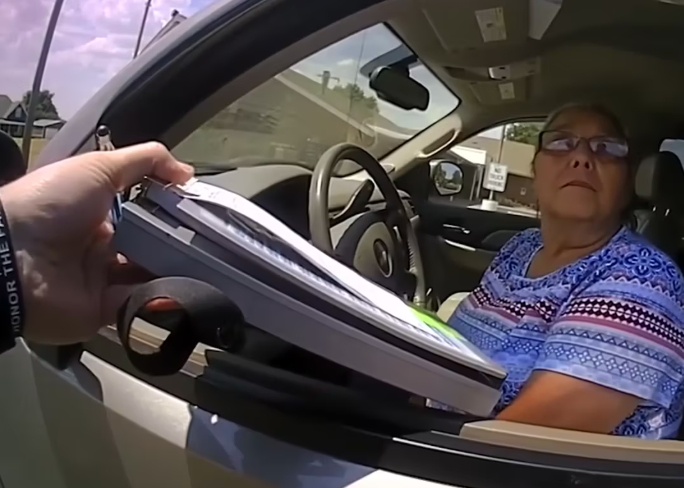
Picture this: an officer initiates a traffic stop for a simple infraction, only to be met by a driver with no license, no registration, and no visible plates, who then launches into a lengthy, convoluted dissertation about their “right to travel” freely without government interference. These encounters, frequently captured in vivid detail by US police bodycam footage, are not merely perplexing; they often escalate rapidly. Officers are trained to de-escalate, but the fundamental disconnect in legal understanding can quickly lead to non-compliance, resistance, and ultimately, forced apprehension. The classic conclusion to these exchanges, often highlighted in viral clips, involves a decisive “smash and grab” – the vehicle’s window broken, and the non-compliant individual extracted. These videos offer more than just entertainment; they serve as a stark, albeit dramatic, educational tool for the public, illustrating a fundamental principle of the criminal justice system: rights always come with responsibilities, and adherence to established law is non-negotiable within a civilized society. Understanding the psychological profiles and legal fallacies behind the Sovereign Citizen movement is critical for developing effective risk management for law enforcement strategies and improving officer safety during these unpredictable interactions.
Beyond the Badge: The Profound Psychological Toll and Scrutiny Faced by Officers in the Bodycam Era
While the public often sees the immediate outcome – a suspect apprehended, a situation resolved – they rarely witness the enduring weight an officer carries long after the siren fades. The very US police bodycam footage that brings transparency can also magnify the immense psychological pressures borne by law enforcement professionals. Every use of force, particularly an officer-involved shooting (OIS), triggers an exhaustive and emotionally taxing investigation by Internal Affairs units and potentially other oversight bodies. These probes, meticulously dissecting every fraction of a second, can span months, placing officers under intense scrutiny and immense stress, regardless of the incident’s justification.
The specter of an OIS, forever immortalized on US police bodycam footage, places officers at the epicenter of media storms and public outcry. A split-second decision, made under extreme duress to protect life, can be endlessly replayed, analyzed, and critiqued by armchair experts and activists alike. A justifiable action might save lives, but a minor perceived misstep, even if legally sound, can ignite city-wide protests and irrevocably damage an officer’s career and reputation. This underscores the critical importance of platforms like PoliceActivity or Donut Operator, which provide invaluable, informed analysis of US police bodycam footage. These channels, often run by former or current law enforcement personnel, help contextualize an officer’s actions within the framework of their training, department policy, and the specific dynamics of a volatile situation, fostering a more nuanced public understanding. Moreover, the constant awareness of being recorded adds another layer of mental strain, highlighting the urgent need for robust officer wellness programs that address mental health and resilience in the face of such pervasive oversight and public judgment. Investment in these programs, alongside advanced tactical equipment suppliers who provide reliable bodycams, is paramount for the long-term health and effectiveness of our police force.
The Unsung Heroes: K9 Units and Their Indispensable Role in Modern Policing
It’s impossible to discuss effective policing and the dramatic moments captured by US police bodycam footage without acknowledging the extraordinary contributions of K9 units. These highly trained, four-legged officers – predominantly Belgian Malinois and German Shepherds – are not just companions; they are specialized tools, deterrents, and often, life-savers, striking fear into the hearts of criminals hiding in dense brush or fleeing through urban landscapes.
When verbal commands fail, when a suspect is barricaded, or when a dangerous individual is evading capture in an area too risky for human officers, the command “Release the K9!” often signifies the final, decisive step. The US police bodycam footage documenting these K9 deployments is consistently among the most awe-inspiring. Watching a K9 expertly track a scent, apprehend an armed suspect, or protect its handler with unwavering loyalty demonstrates an astonishing blend of courage, discipline, and training. These dogs undergo rigorous preparation, forming an unbreakable bond with their human partners. They are invaluable assets in public safety technology, excelling in tasks ranging from suspect apprehension and drug detection to explosives sniffing and search-and-rescue operations. Their integration into tactical teams enhances officer safety and improves the efficiency of high-risk operations, a testament to their critical role in ensuring law and order.
The Digital Frontier: AI, Data Analytics, and the Future of US Police Bodycam Footage Management
The rapid pace of technological innovation, particularly in artificial intelligence (AI) and data analytics, is poised to revolutionize how we manage, analyze, and leverage US police bodycam footage. We are witnessing the emergence of sophisticated tools like Lighthouse AI and other advanced video processing platforms that go far beyond simple recording. These technologies promise to enhance clarity, expedite investigations, and deepen our understanding of incidents in ways previously unimaginable.
Imagine AI algorithms clarifying blurry faces, reconstructing ballistic trajectories with pinpoint accuracy, or even analyzing body language to identify pre-assault indicators. These are not futuristic concepts; they are capabilities actively being developed and deployed. AI-powered analytics can parse thousands of hours of raw US police bodycam footage to swiftly identify key events, extract pertinent metadata, and compile concise incident reports, significantly reducing the manual workload for investigators. This leap forward demands robust digital evidence management systems capable of securely storing, indexing, and retrieving vast quantities of data, ensuring chain of custody and compliance with stringent data privacy laws.
The future will likely see even greater integration, with AI in law enforcement moving towards predictive analytics, identifying crime hotspots, or even optimizing patrol routes based on real-time data from bodycams and other sensors. However, this advancement also necessitates careful consideration of ethical implications, particularly concerning facial recognition technology, data bias, and the potential for misuse. The ongoing conversation about data privacy law enforcement practices, government contracts for body cameras, and the need for clear oversight will shape how these powerful tools are implemented. For law enforcement agencies, understanding the market for law enforcement technology solutions and carefully evaluating vendors of police accountability software and forensic video analysis tools will be critical in harnessing these advancements responsibly, ensuring that technology serves justice without infringing on civil liberties.
The Cultural Tapestry: How US Police Bodycam Footage Shapes Global Perceptions and Public Dialogue
Beyond its operational and evidential utility, US police bodycam footage has transcended its origins to become a powerful global cultural phenomenon. Thanks to the reach of social media platforms, these raw clips offer a unique lens through which audiences worldwide, from remote villages to bustling metropolises, gain insight into the intricacies of the American criminal justice system, the nature of community policing, and the social dynamics within the United States.
For viewers, it’s more than just watching police work; it’s an interactive lesson in due process, the Fourth Amendment, and the practical application of law. It teaches about de-escalation tactics, suspect apprehension protocols, and the complex dialogue that often unfolds between citizens and law enforcement. This unfiltered access fosters a global dialogue about human rights, the appropriate use of force, and the challenges inherent in maintaining order in a diverse society. The discussions generated by these videos contribute to a broader understanding of law enforcement, influencing opinions, shaping policy debates, and even inspiring future generations to consider careers as first responders. The footage acts as a constant reminder that policing is not a monolithic entity but a dynamic, human-centric endeavor, constantly under the microscope of public scrutiny and evolving societal expectations.
A Clearer View Forward: The Enduring Legacy of US Police Bodycam Footage
In conclusion, the journey of US police bodycam footage from a niche technological experiment to an indispensable cornerstone of modern law enforcement has been nothing short of transformative. It has ushered in an era of unprecedented transparency, providing objective accounts that hold both officers and civilians accountable. It has become a vital source of legal evidence, a powerful training tool, and a global cultural touchstone that sparks essential conversations about justice, ethics, and the role of police in society.
As we look towards 2025 and beyond, the integration of advanced AI and data analytics promises to further refine the utility and impact of this technology. However, with great power comes great responsibility. The ongoing challenge will be to balance the imperative for transparency and accountability with the crucial need for privacy protection, ethical deployment of AI, and robust support for the men and women who wear the badge.
To truly understand the multifaceted impact of this crucial technology and explore how your organization can navigate the complexities of digital evidence, or if you’re seeking to implement cutting-edge law enforcement technology solutions, we invite you to connect with our experts. Let’s collaborate to ensure that the power of US police bodycam footage continues to serve the cause of justice, foster public trust, and enhance the safety of our communities.