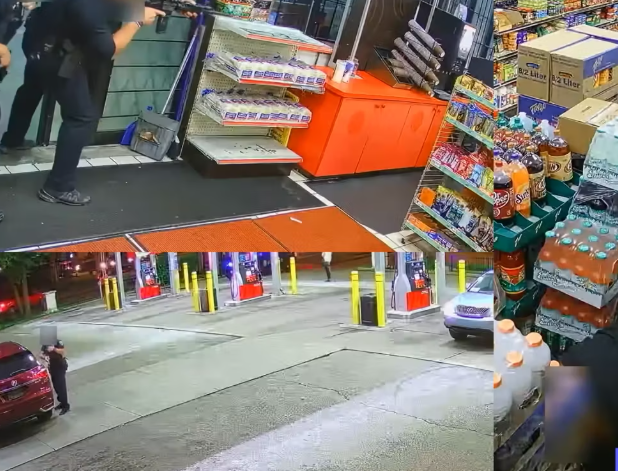
Beyond the Lens: Unpacking the Unfiltered Reality of US Police Bodycam Footage
For a decade, my vantage point from within the public safety sector has offered a front-row seat to the seismic shifts in law enforcement. One of the most profound transformations? The ubiquitous presence of body-worn cameras (BWCs) and the subsequent explosion of US police bodycam footage. What started as a niche technological implementation has burgeoned into a global phenomenon, captivating millions and fundamentally reshaping public discourse around policing. This isn’t just about compelling viral clips; it’s about the evolution of transparency, accountability, and the very fabric of our criminal justice system.
The allure of US police bodycam footage is undeniable. It’s raw, unscripted, and often intensely dramatic, offering a visceral glimpse into the daily perils and split-second decisions faced by officers across the nation. Unlike the stylized drama of fictional crime shows, these videos provide an unvarnished window into the intersection of law, human behavior, and high-stakes encounters. From routine traffic stops escalating unexpectedly to critical incidents demanding immediate, decisive action, the camera lens has become an indispensable witness, recording the truth as it unfolds.
The Paradigm Shift: From Reality TV to Indisputable Evidence
Before the widespread adoption of body-worn cameras, public perception of policing was often shaped by traditional media narratives, eyewitness accounts, or antiquated reality television like “COPS.” While groundbreaking in its era, “COPS” offered a curated perspective, edited for entertainment value and often lacking the granular detail required for genuine accountability. The advent of the BWC, however, represented a quantum leap. By the mid-2010s, major departments like the Los Angeles Police Department (LAPD) and the New York Police Department (NYPD), alongside numerous sheriff’s offices in states like Florida and Texas, had fully embraced or mandated their use.
This wasn’t merely an upgrade in surveillance technology; it was a fundamental shift in how justice is documented and perceived. US police bodycam footage transformed from mere observational content into irrefutable legal evidence. It provides an objective record, capturing audio and visual data that can corroborate officer statements, validate citizen complaints, or exonerate officers falsely accused of misconduct. This level of granular documentation is invaluable, serving as a cornerstone for both internal affairs investigations and external legal proceedings. For departments seeking to enhance public trust in law enforcement and demonstrate their commitment to ethical policing, investing in advanced BWC programs has become a non-negotiable aspect of modern operations.
Unpacking the Unscripted Drama: High-Stakes Encounters and Human Factors
The sheer volume and diversity of US police bodycam footage offer an unparalleled repository for understanding complex police-public interactions. What viewers often see are not just arrests, but critical decision-making processes under extreme duress. Consider the dynamics of a suspected DUI stop that rapidly escalates due to non-compliance, or a high-speed pursuit spanning multiple jurisdictions. These aren’t simple narratives; they are intricate sequences of events where officers must weigh legal protocols, de-escalation tactics, and the immediate threat to public safety.
The footage frequently highlights the human element—the palpable tension in an officer’s voice, the rapid breathing, the verbal commands (“Drop the weapon!”), and the often-split-second choices made when lives hang in the balance. It exposes the inherent risks of the profession and provides context for actions that might otherwise appear arbitrary or excessive. For law enforcement agencies, this footage is a critical tool in police training, allowing for detailed case studies and simulations that prepare new recruits and veteran officers for the unpredictable nature of their work. Furthermore, it aids in the development of robust risk management strategies, helping departments identify patterns and implement preventative measures to reduce adverse outcomes.
Navigating Legal Quagmires: Sovereign Citizens and Constitutional Clash Points
One of the most perplexing and often viral categories of US police bodycam footage involves encounters with individuals identifying as “Sovereign Citizens.” These encounters are consistently among the most viewed, not just for their dramatic tension, but for the profound legal and educational insights they offer. Believing themselves exempt from state and federal laws, these individuals frequently challenge police authority with convoluted legal arguments, often refusing to provide identification, driver’s licenses, or vehicle registration.
The footage clearly illustrates the stark contrast between their fringe legal theories and the practical realities of law enforcement. Viewers witness officers patiently, yet firmly, explain legal requirements, only to be met with lengthy pseudo-legal diatribes. The inevitable outcome, frequently captured on bodycam, often involves a broken window or a forceful extraction from a vehicle, serving as a harsh but clear lesson: rights and freedoms are always balanced by responsibilities and the rule of law. For those seeking to understand the nuances of the criminal justice system and the legitimate boundaries of legal recourse, these clips offer invaluable, albeit uncomfortable, case studies. Such incidents underscore the need for advanced police legal defense counsel and proactive public safety consulting to guide departments through these unique challenges.
The Invisible Burden: Officer Wellness and Public Scrutiny
Behind every badge and every piece of US police bodycam footage lies a human being grappling with immense pressure. While the public often sees the decisive action of an officer apprehending a suspect, the emotional and psychological aftermath is rarely visible. Officer-involved shootings (OIS) or other uses of force, even when justified, trigger months of rigorous internal affairs investigations, legal reviews, and intense media scrutiny. A single, justifiable pull of a trigger can lead to professional and personal turmoil, impacting mental health and career trajectory.
The bodycam, in these scenarios, becomes a double-edged sword. While it can exonerate an officer, it also records every detail, exposing them to microscopic examination by the public, activist groups, and legal experts. Channels dedicated to analyzing US police bodycam footage, like PoliceActivity or Donut Operator, play a vital role in educating the public on use-of-force continuums, de-escalation techniques, and the complex legal frameworks officers operate within. This analysis helps contextualize officer actions, fostering a more informed public dialogue rather than relying solely on sensationalized headlines. Departments are increasingly recognizing the need for robust officer wellness programs and crisis management training to support their personnel through these challenging periods.
The Unsung Heroes: K9 Units and Their Indispensable Role
No discussion of law enforcement reality captured by BWCs would be complete without acknowledging the extraordinary contributions of K9 units. These highly trained police dogs—often Belgian Malinois or German Shepherds—are not merely mascots; they are indispensable members of the force, capable of tracking suspects, detecting contraband, and protecting their handlers. US police bodycam footage showcasing K9 operations consistently garners high viewership, inspiring awe and respect for these four-legged heroes.
When verbal commands and less-lethal options fail, “releasing the K9” is often the most effective and safest method for apprehending dangerous or fleeing suspects, particularly in challenging environments like dense brush or abandoned buildings. The footage frequently captures the breathtaking courage and disciplined precision of K9s as they neutralize threats, often preventing a more violent confrontation. These clips highlight the rigorous training involved and underscore the strategic value of K9 units in maintaining public safety. For agencies exploring cutting-edge police technology solutions, the integration of K9 capabilities with advanced surveillance systems offers a powerful force multiplier.
The Digital Horizon: AI, Data Analytics, and the Future of Evidence
As we move toward 2025, the realm of US police bodycam footage is being revolutionized by artificial intelligence (AI) and sophisticated data analytics. Beyond simply recording, technology is now enhancing the interpretability and utility of this vast data pool. AI-powered tools are emerging that can rapidly process thousands of hours of video, automatically redacting sensitive information, clarifying blurred faces, enhancing low-light footage, and even analyzing projectile trajectories in shooting incidents. This reduces the burden on human analysts and accelerates the review process, critical for timely investigations.
Such advancements are transforming how evidence is collected, processed, and presented. AI can identify patterns in police-public interactions, flagging potential areas for improved training or policy adjustments. Predictive analytics, driven by insights from historical bodycam data, can inform resource allocation and crime prevention strategies. This ensures a higher degree of transparency and accountability. If an officer’s actions are questioned, the camera, enhanced by AI, can often provide an objective, data-driven account. Conversely, it can swiftly corroborate an officer’s justified actions, protecting them from unfounded accusations. The adoption of robust data analytics for law enforcement is not just a trend; it’s a foundational element for future-proofing police operations and optimizing criminal justice processes. Government contracts for law enforcement equipment and software are increasingly prioritizing these AI-driven solutions.
Conclusion: A Cultural Touchstone and Catalyst for Progress
The phenomenon of US police bodycam footage has transcended its initial purpose as an accountability tool to become a significant cultural touchstone. It offers a unique lens through which global audiences can witness, learn from, and engage with the complexities of American law enforcement and society. From understanding the nuanced application of law to appreciating the human element in high-stakes situations, these recordings foster a more informed perspective. They highlight the ongoing evolution of police training, public safety protocols, and the ethical considerations that continually shape the role of law enforcement in a democratic society.
As an industry expert, I’ve seen firsthand how this technology has driven crucial conversations about police accountability, procedural justice, and officer well-being. It represents an ongoing commitment to transparency and a vital step towards building stronger relationships between police departments and the communities they serve.
In a rapidly evolving public safety landscape, understanding the intricate dynamics captured by these cameras is more critical than ever. If your organization is looking to navigate the complexities of modern law enforcement, optimize public safety outcomes, or implement cutting-edge police technology solutions to enhance transparency and efficiency, we invite you to connect with our team of experts. Let us help you harness the power of data and strategic insights to fortify your operations and build lasting community trust.