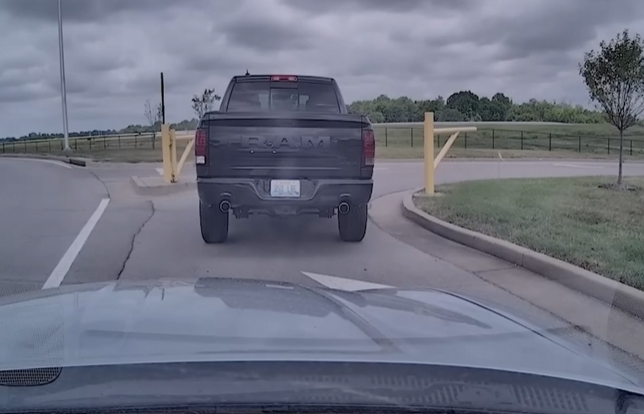
Unfiltered Lens: A Decade Inside the Transformative World of US Police Bodycams
As someone who has navigated the evolving landscape of law enforcement technology for over a decade, I can confidently say that few innovations have reshaped policing more profoundly than the widespread adoption of US police bodycams. What began as a nascent experiment in transparency has blossomed into an indispensable tool, a digital witness that captures the raw, often chaotic, reality of street-level enforcement. From routine traffic stops to high-stakes confrontations, these compact devices are not merely recording devices; they are catalysts for change, legal linchpins, and, for many, a window into the complex tapestry of American justice.
My journey in this sector has seen the conversation shift from “should we equip officers with bodycams?” to “how do we best leverage the vast amounts of data these devices generate?” This isn’t just about catching a glimpse of a “real-life Cops” episode; it’s about understanding the nuances of public safety, officer accountability, and the critical role technology plays in building – or eroding – public trust.
The Unfiltered Allure: Why We’re Drawn to Law Enforcement Encounters
There’s an undeniable magnetism to the unscripted drama captured by US police bodycams. Why do millions flock to platforms like YouTube and TikTok to watch grainy, often shaky footage of police interactions? It’s not for Hollywood-level production value; it’s for the visceral, unvarnished truth. Unlike the curated narratives of traditional media, bodycam footage offers an unfiltered look at encounters where every decision carries immense weight.
In my experience, the public’s fascination stems from a desire for authenticity. We see officers responding to everything from seemingly trivial DUI checkpoints to harrowing high-speed pursuits across state lines, or tense standoffs in dimly lit alleyways. Each frame is a testament to the unpredictable nature of police work, a stark confrontation between order and chaos. This raw realism has superseded the staged drama of shows like “Cops,” offering a direct, personal perspective from the officer’s point of view, and by extension, a critical opportunity for law enforcement transparency and understanding. The narrative isn’t pre-written; it unfolds in real-time, making every breath, every command, every split-second decision resonate with profound authenticity.
From Static Cameras to Dynamic Digital Evidence: The Bodycam Revolution
The evolution of surveillance technology in policing has been staggering. Back in the ’90s, the “Cops” TV show relied on camera crews shadowing officers, offering a third-person, often sensationalized, view. Fast forward to today, and US police bodycams have completely transformed the game. They’ve transcended mere entertainment, becoming the ultimate arbiters of legal fact.
In virtually every major police department across the United States – from the bustling streets served by the Los Angeles Police Department (LAPD) to the intricate challenges faced by the New York City Police Department (NYPD), and the vast jurisdictions managed by Florida Sheriff’s Offices – the mandatory deployment of body-worn cameras is now standard operating procedure. This shift has created an unprecedented digital archive of real-world policing, something no cinematic production could ever replicate. The sheer volume of data, capturing everything from the officer’s labored breathing during a foot chase to the unequivocal “Drop the gun!” command, provides invaluable context to critical incidents.
For departments, this represents a significant investment in law enforcement technology solutions and public safety software. The benefits extend beyond mere record-keeping; bodycams provide irrefutable evidence for court cases, aid in internal investigations, and serve as crucial training tools. This widespread adoption of US police bodycams highlights a broader commitment to accountability, pushing departments to consider comprehensive digital evidence management systems (DEMS) that can handle the petabytes of data generated daily. The legal implications are immense; bodycam footage can make or break a case, protect officers from false accusations, and hold those who abuse authority to account, fundamentally altering the landscape of criminal justice reform initiatives.
Navigating the Legal Labyrinth: Sovereign Citizens and Unforeseen Confrontations
Among the most captivating, and often frustrating, content captured by US police bodycams are encounters with individuals identifying as “Sovereign Citizens.” These are individuals who subscribe to a fringe belief that they are exempt from most federal and state laws, often leading to protracted, legally convoluted, and occasionally volatile interactions.
My experience has shown that these situations are a masterclass in de-escalation, legal understanding, and patience. Officers frequently encounter drivers without licenses or proper vehicle registration who, when pulled over, launch into lengthy, often nonsensical diatribes about their “right to travel” or “common law.” The ultimate outcome is often predictable: a broken window, forced extraction, and an arrest, to the bewilderment of the individual in question. These clips are more than just internet fodder; they serve a crucial, albeit informal, educational purpose, illuminating the fundamental principle of American jurisprudence: rights and responsibilities are inextricably linked.
The detailed footage provided by US police bodycams in these scenarios is vital. It documents every verbal exchange, every refusal to comply, and every action taken by both the officer and the subject. This level of detail is paramount for legal liability defense and for demonstrating adherence to use-of-force policies. For departments undertaking police department technology procurement, the ability of these cameras to capture clear audio and video in challenging environments is a non-negotiable feature, directly impacting the integrity of evidence in such complex cases.
Beyond the Badge: The Invisible Pressures and Psychological Toll
While the public often only sees the climactic moments of an arrest or a critical incident, few truly grasp the immense psychological and institutional pressures faced by law enforcement officers, especially in the aftermath. Every decision to use force, particularly deadly force, triggers months of exhaustive scrutiny by Internal Affairs and independent oversight bodies.
Officer-involved shootings (OIS) are perpetually under the microscope of media and public discourse, often sparking city-wide protests and intense public debate. A correct, life-saving decision in a fraction of a second can be endlessly dissected, while a minor error can ignite widespread unrest and accusations of misconduct. This is precisely why analytical channels like PoliceActivity and Donut Operator have become so influential. They leverage bodycam footage to provide expert, frame-by-frame breakdowns, offering crucial context and helping the public understand the intricate thought processes and rapidly unfolding circumstances that dictate an officer’s actions in high-stress situations.
The constant threat of legal review, public condemnation, and potential civil litigation adds layers of stress to an already demanding profession. US police bodycams play a dual role here: they are tools of accountability, ensuring officers adhere to protocol, but they also serve as vital protective measures, often exonerating officers from baseless claims of wrongdoing. The ethical considerations around data storage, privacy, and public release of sensitive footage remain a critical aspect of surveillance technology ethics, forcing a delicate balance between transparency and protecting individual dignity. It’s a complex equation where technology, human emotion, and legal frameworks constantly intersect.
The Four-Legged Protectors: Unsung Heroes of the K9 Unit
No discussion about the front lines of law enforcement, particularly as documented by US police bodycams, would be complete without acknowledging the extraordinary contributions of police K9 units. These highly trained animals, predominantly German Shepherds and Belgian Malinois, are formidable assets in tracking, apprehension, and officer protection, striking fear into the hearts of suspects attempting to evade capture.
In my experience, the command “Release the K9!” often signals the final stage of an encounter when all other de-escalation tactics have failed. The footage capturing these moments is consistently among the most compelling: a K9 expertly locating and apprehending a barricaded or armed suspect, showcasing unparalleled bravery, discipline, and efficiency. These “four-legged warriors” save lives – both civilian and officer – by confronting dangers that humans alone cannot.
US police bodycams are instrumental in documenting K9 deployments, providing clear evidence of their actions and ensuring compliance with departmental policies regarding their use. This is crucial for law enforcement training programs and for demonstrating the justifiable use of K9 force in court. The integration of K9 units into modern policing, captured vividly by bodycams, underscores the diverse strategies and resources law enforcement agencies deploy to ensure public safety, an area continuously evaluated for both effectiveness and ethical deployment within the larger scope of community policing efforts.
The Dawn of Predictive Policing: AI, Data Analytics, and the Future of Evidence
We are on the cusp of a revolutionary era in policing, one where advanced analytics and artificial intelligence (AI) will fundamentally transform how bodycam data is processed and utilized. Technologies like automated video analysis platforms are no longer science fiction; they are becoming practical realities, offering capabilities such as clarifying obscured faces, meticulously analyzing projectile trajectories, and efficiently summarizing thousands of hours of raw footage into concise, actionable intelligence for investigators and content creators alike.
In my professional view, this represents the next frontier for US police bodycams. AI-driven platforms will allow agencies to move beyond mere storage to proactive analysis. Imagine a system that can automatically flag specific types of interactions, identify potential de-escalation failures, or even correlate incident locations with known crime patterns. This shift promises unprecedented levels of transparency and operational efficiency. If an officer’s actions are questionable, AI can help pinpoint it; if an officer acts heroically, AI can help validate it. This capability is paramount for strengthening police accountability and ensuring fair investigations.
The advent of AI in policing also raises important questions about data privacy concerns and the potential for algorithmic bias. The ethical deployment of AI in these systems is a critical conversation that must accompany the technological advancements. However, the potential for enhanced public safety software that supports proactive policing, improves officer safety, and provides robust, unbiased evidence is immense. The ongoing evolution of body worn camera systems cost and capabilities, coupled with sophisticated data analytics for law enforcement, is charting a course towards a future where policing is not only more transparent but also significantly more intelligent and data-driven. This convergence of advanced technology and human expertise is setting new standards for government contracts security and the strategic acquisition of sophisticated law enforcement technology solutions.
US Police Bodycams: A Global Cultural Phenomenon and Catalyst for Justice
US police bodycams have transcended their initial role as mere recording devices to become a genuine global cultural phenomenon. They offer an unparalleled window into the often-challenging realities of American law enforcement, attracting viewers worldwide who seek to understand everything from tactical responses to nuances of legal dialogue and the broader societal dynamics at play.
These raw, unedited narratives fuel an ongoing, vital dialogue about justice, accountability, and the relationship between law enforcement and the communities they serve. From Vietnam to Europe, viewers are not just entertained; they are learning, observing, and gaining a more nuanced perspective on the challenges and responsibilities inherent in maintaining order. The footage provides crucial insights into police reform efforts, highlighting areas where training and policy can be improved, and showcasing the professionalism and bravery of officers who uphold the law under immense pressure.
In essence, US police bodycams have become a touchstone of modern policing, deeply embedded in our collective consciousness. They represent a powerful commitment to transparency, a commitment that is continuously refined by technological advancements and evolving societal expectations. The journey is far from over, but the path forward is illuminated by the undeniable truth captured through these lenses.
Take the Next Step Towards Enhanced Public Safety and Accountability
As the landscape of law enforcement continues to evolve, staying ahead with the latest in body-worn camera technology and comprehensive digital evidence management is not just an advantage—it’s a necessity. If your agency is looking to upgrade its current US police bodycams or explore cutting-edge law enforcement technology solutions that incorporate AI and advanced analytics, we invite you to connect with our experts. Let us help you navigate the complexities of procurement, implementation, and training to ensure your department is equipped for the future of transparent and effective policing. Contact us today to discuss how we can empower your team with the tools needed to build greater trust and enhance public safety.