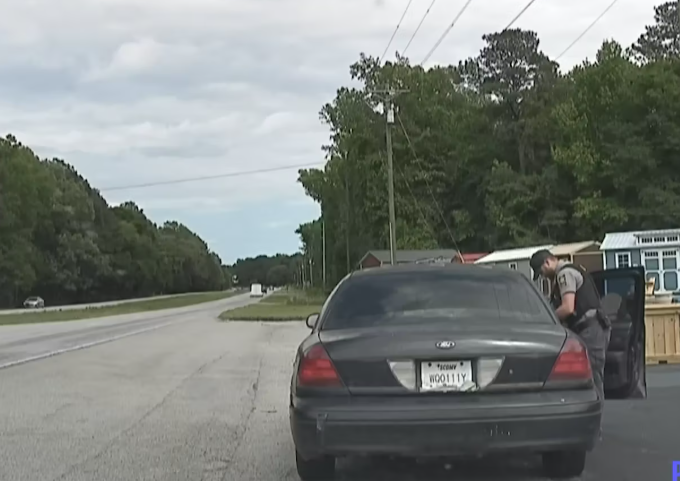
Beyond the Lens: Deconstructing US Police Bodycam Footage and the Future of Law Enforcement Transparency
As an industry expert with over a decade immersed in law enforcement technology and its sociological impacts, I’ve witnessed firsthand the transformative power of the seemingly ubiquitous police bodycams. These miniature recording devices, often perched on an officer’s uniform, have evolved from niche experimental gadgets to indispensable tools at the heart of the modern criminal justice system. They offer an unparalleled, unvarnished look into the daily realities of policing in the United States, captivating global audiences and reshaping the very dialogue around public safety, police bodycams have become far more than mere recording devices—they are instruments of accountability, vital evidence, and a powerful, if sometimes controversial, lens through which we scrutinize justice itself.
The fascination isn’t rooted in Hollywood special effects; it’s the raw, unfiltered authenticity that resonates. From a routine traffic stop escalating unexpectedly to the split-second decisions made during a high-speed pursuit, police bodycams deliver a narrative that no scripted drama can replicate. Viewers aren’t just observing an arrest; they are witnessing the intricate dance between order and chaos, law and defiance, all framed by the officer’s perspective. This immediacy profoundly impacts public perception, fueling debates on everything from use-of-force protocols to community engagement strategies.
The Irresistible Pull of Real-Life Encounters: Why We Watch
For decades, our understanding of American policing was largely shaped by traditional media—news reports, scripted dramas, and the pioneering reality show “COPS.” These depictions, while influential, were inherently filtered, often edited for narrative flow or dramatic effect. Then came the police bodycams, and with them, an unprecedented democratizing of information. The grainy, often shaky footage—sometimes from multiple perspectives—offers a visceral experience that bypasses traditional gatekeepers, broadcasting directly to millions via platforms like YouTube and TikTok.
What draws us in? It’s the inherent human curiosity about high-stakes situations, coupled with a desire for transparency. Each clip provides a front-row seat to critical incidents, from intense domestic disturbances to complex tactical operations. These are not actors rehearsing lines; these are real people under immense pressure, making life-altering decisions. The tension captured in an officer’s voice, the adrenaline visible in their movements, the immediate consequences of action or inaction—it all contributes to a compelling, often educational, experience. This unscripted reality has transformed how the public engages with law enforcement, fostering a deeper, albeit sometimes more critical, understanding of the challenges officers face daily. The growing prevalence of police bodycams has fundamentally shifted the visual narrative of law enforcement, creating a vast, publicly accessible archive of encounters.
From Analog Pursuits to Digital Evidence: The Bodycam Revolution
The evolution from the 1990s “COPS TV show” style cinematography, often featuring camera operators riding along, to the modern “bodycam era” represents a monumental leap in surveillance technology and evidence collection. Once a luxury, police bodycams are now a critical component of public safety technology across major US jurisdictions. Departments like the LAPD, NYPD, and numerous sheriff’s offices nationwide have mandated their use, recognizing their value not just for entertainment, but as an ultimate form of legal evidence.
The technological advancements in police bodycams have been rapid and profound. Early models suffered from poor video quality, limited battery life, and cumbersome data management. Today’s advanced body camera systems offer high-definition video, robust audio capture, pre-event recording capabilities, and seamless integration with cloud-based digital evidence management software. This allows for secure storage, easy retrieval, and maintaining a strict chain of custody, which is vital for legal compliance and courtroom admissibility. The shift has also introduced complex challenges: managing terabytes of data, ensuring data privacy, and developing clear policies for footage retention and public release. This sophisticated law enforcement technology has fundamentally reshaped internal investigations, legal proceedings, and the very fabric of officer accountability, impacting everything from minor infractions to officer-involved shootings (OIS). The push for greater police transparency has been a key driver in the widespread adoption of police bodycams, moving beyond mere compliance to a strategic imperative for building public trust.
Navigating Legal Labyrinths: The “Sovereign Citizen” Phenomenon
One particularly captivating, and often frustrating, aspect of bodycam footage frequently circulating online involves encounters with individuals identifying as “Sovereign Citizens.” These individuals adhere to a decentralized, anti-government ideology, believing they are exempt from most US laws, including traffic regulations, taxation, and judicial processes. For officers, these interactions represent a unique and often protracted challenge, highlighting the intersection of legal theory, personal belief, and practical policing.
Footage often shows traffic stops where individuals, operating vehicles without licenses or valid registration, launch into lengthy, convoluted legal arguments, citing obscure interpretations of common law or constitutional rights. The exasperation on an officer’s face is palpable as they attempt to explain established statutes, often to no avail. The common outcome is predictable: a refusal to comply, an escalation of force, and an arrest. These clips are not merely entertaining; they serve an educational function, illustrating the practical application of American law and reinforcing that rights always come with corresponding responsibilities. Police bodycams in these scenarios become an irrefutable record, documenting the officer’s attempts at de-escalation, the suspect’s non-compliance, and the eventual necessity of enforcement. This documentation is crucial for subsequent legal proceedings and for justifying police actions to the public, offering valuable insights into the complexities of risk management in law enforcement and the limitations faced when encountering individuals who reject foundational legal principles.
Beyond the Badge: The Invisible Toll on Law Enforcement
While police bodycams capture the dramatic arrests and confrontations, they rarely convey the immense psychological burden shouldered by officers. The public often sees the moment of action—the apprehension of a suspect, the response to a violent crime—but rarely the aftermath. Every use-of-force incident, particularly an officer-involved shooting (OIS), triggers an exhaustive internal affairs investigation, often lasting months, during which the officer’s actions are scrutinized frame by frame.
The intense media scrutiny and potential for public protest surrounding an OIS can be overwhelming. A decision made in a fraction of a second, aimed at preserving life, can lead to city-wide unrest if perceived incorrectly. This is where the unbiased lens of police bodycams becomes invaluable. They offer an objective record that can protect an officer who acted within policy and law, while also identifying misconduct where it occurs. Platforms like PoliceActivity and Donut Operator, run by former law enforcement professionals, play a crucial role in dissecting this footage, providing contextual analysis that helps the public understand the intricate legal frameworks and split-second considerations guiding an officer’s actions. Their expert commentary demystifies complex incidents, fostering a more nuanced public understanding and contributing to informed discourse around justice system reform and officer accountability. This emphasis on transparency and documentation is paramount for both officer protection and maintaining public trust.
The Unsung Heroes: K9 Units in Modern Policing
No comprehensive discussion of US policing, particularly one centered on dynamic encounters, would be complete without acknowledging the indispensable role of K9 units. These highly trained police service dogs, primarily breeds like Belgian Malinois and German Shepherds, are more than just loyal companions; they are specialized law enforcement solutions, acting as force multipliers in some of the most challenging situations.
The command “Release the K9!” often signals a critical juncture in an operation, typically employed when verbal commands have failed, and a suspect poses a threat or is actively evading capture in dangerous terrain. Bodycam footage frequently captures these moments, showcasing the K9’s incredible courage, discipline, and effectiveness in apprehending armed or fleeing suspects. These clips highlight the K9’s ability to track, detect contraband, and provide critical protection for officers. The rigorous training of both the dog and its handler is evident, underscoring the K9 unit’s role in enhancing public safety technology. The use of K9s, meticulously documented by police bodycams, offers clear justification for their deployment, providing a transparent record for review in use-of-force incidents and affirming their integral place in modern policing strategies. Their contribution to overall law enforcement solutions is undeniable, often saving lives and de-escalating potentially deadly encounters.
The AI Frontier: Innovating Digital Forensics and Evidence Management
Looking to the future, the sheer volume of data generated by police bodycams presents both a challenge and an immense opportunity, particularly with the rise of artificial intelligence (AI). Tools like Lighthouse and other advanced AI video processing platforms are revolutionizing how law enforcement handles and analyzes footage. These sophisticated systems can rapidly process thousands of hours of video, performing tasks that would be impossible for human analysts.
AI can automatically redact sensitive information (faces of innocent bystanders, personal identifying details) for public release, ensuring privacy compliance. It can enhance video clarity, analyze trajectories in officer-involved shootings, identify objects of interest, and even flag anomalies that might indicate escalating situations. For investigators and content creators alike, AI allows for the rapid distillation of vast amounts of raw footage into actionable intelligence or concise public narratives. This integration of AI in policing is transforming digital forensics, streamlining evidence management software, and providing unprecedented analytical capabilities. The future holds even more promise: predictive policing insights derived from bodycam data, real-time analytics for officer safety, and enhanced training simulations based on real-world scenarios. The underlying principle remains constant: technology doesn’t lie. If an officer errs, the camera provides the evidence. If an officer acts correctly, the camera provides irrefutable protection. This advanced surveillance technology is not just about efficiency; it’s about fundamentally reshaping how justice is administered and perceived, pushing the boundaries of what law enforcement solutions can achieve. It’s a critical area for government contracts and ongoing development in public safety technology.
Conclusion: The Police Bodycam – A Lens on Justice, A Mirror to Society
The police bodycam has transcended its initial function as a mere recording device to become a powerful cultural artifact, a vital legal instrument, and a symbol of evolving public expectations for law enforcement. From generating viral content that captivates millions globally to serving as irrefutable evidence in courtrooms, these devices have irrevocably altered the landscape of US policing. They foster greater transparency, enhance officer accountability, and provide an invaluable educational resource for understanding the complexities of the criminal justice system.
The continuous advancements in law enforcement technology, particularly the integration of AI, promise an even more sophisticated future for evidence collection, analysis, and police oversight. As an industry expert, I see the police bodycams not just as tools, but as critical components of a dynamic ecosystem dedicated to improving public safety, upholding the rule of law, and building trust between communities and the officers who serve them. They serve as both a mirror reflecting the challenges faced by law enforcement and a lens through which we can collectively strive for a more transparent and equitable justice system.
To delve deeper into how advanced police bodycams and integrated digital evidence management solutions can enhance accountability, improve operational efficiency, and strengthen community relations within your jurisdiction, we invite you to connect with our experts for a personalized consultation on the latest innovations in public safety technology.